
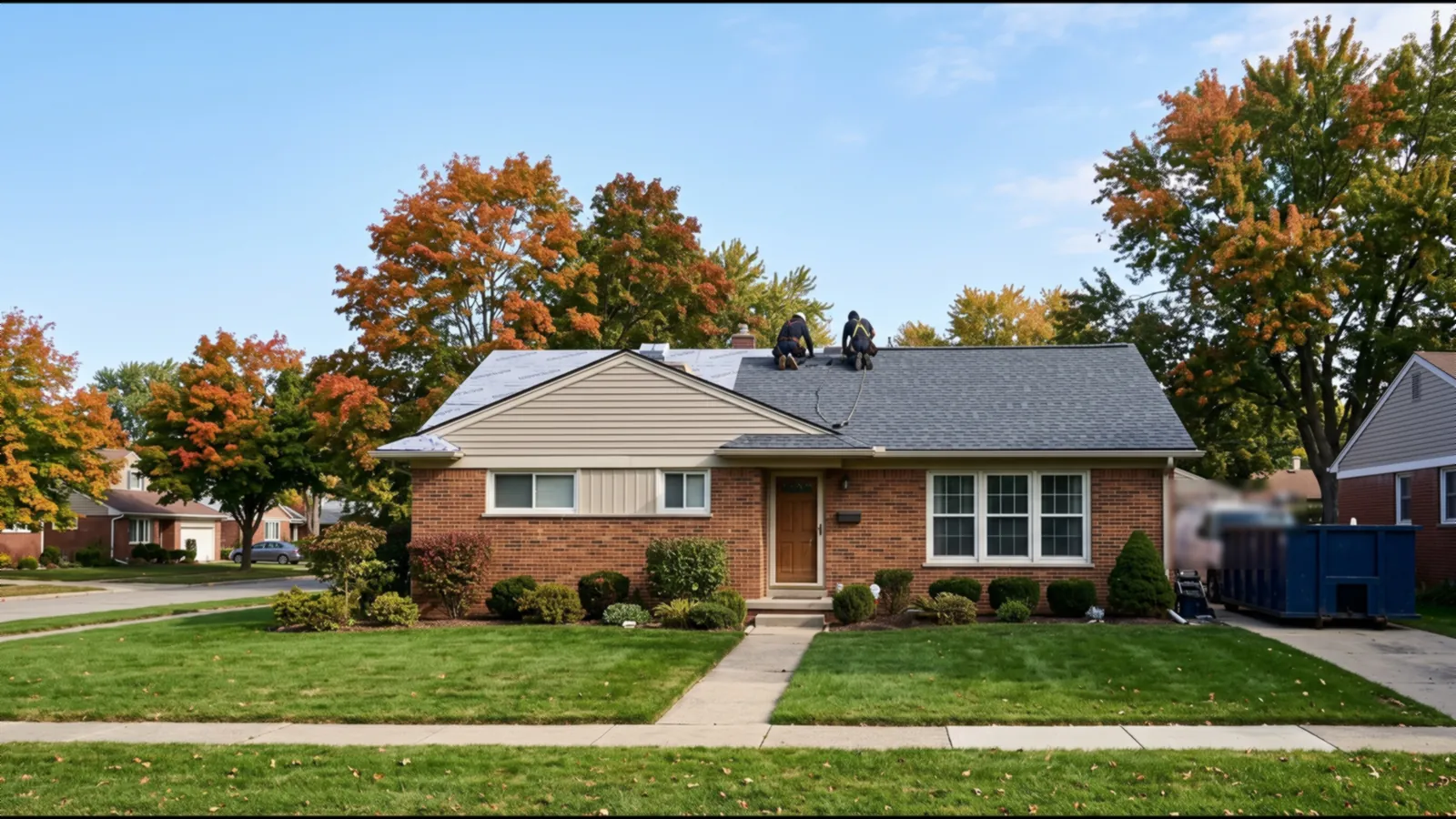
Types of Roof Repair in Southfield
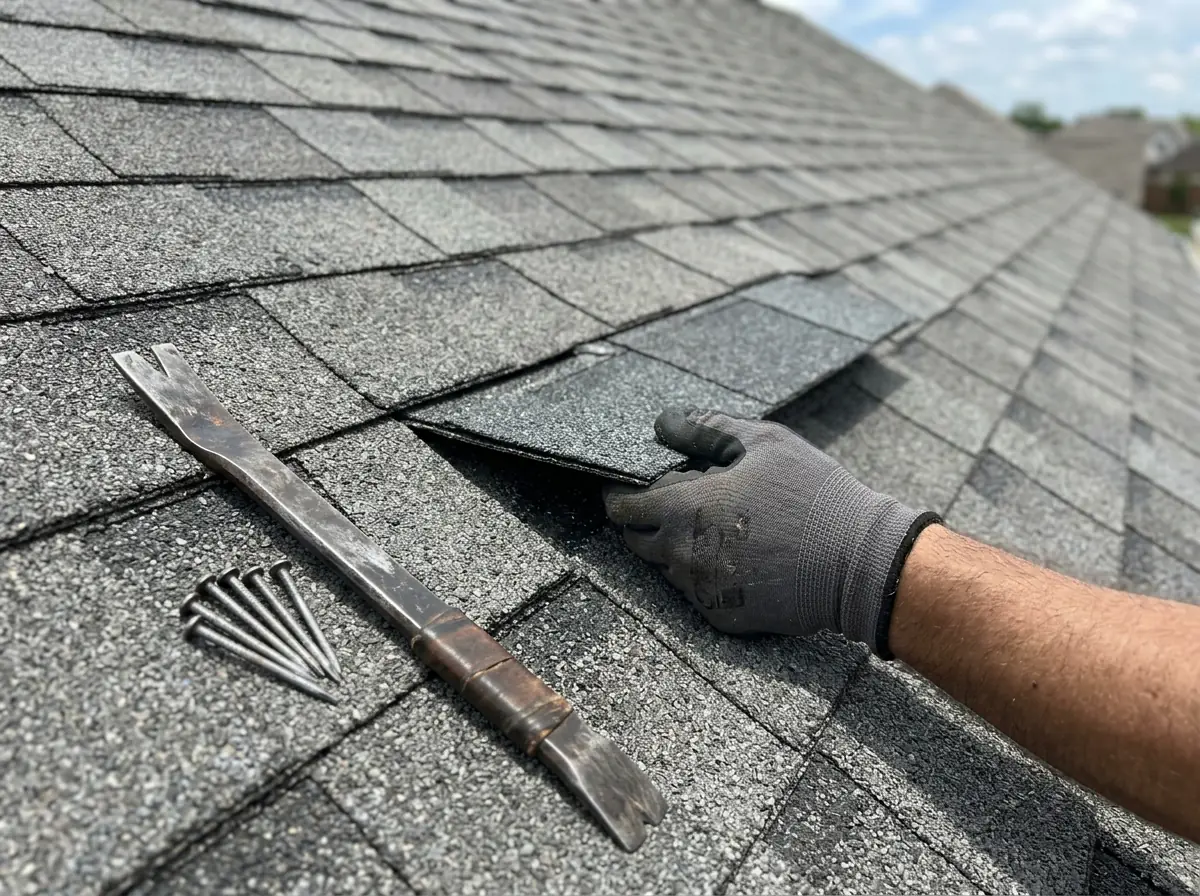
Missing and Wind-Lifted Shingle Repair
A strong wind lifts the tabs that never sealed down, breaks the seal strip, and sometimes takes the shingle with it. The repair is small: break the seal on the course above, pull the nails, slide in a new shingle, nail it in the manufacturer's nailing zone and hand-seal the tabs. HomeGuide puts up to 25 shingles at $100 to $300. A creased tab that's still attached counts as damage too. It has lost its seal and will go in the next gust.
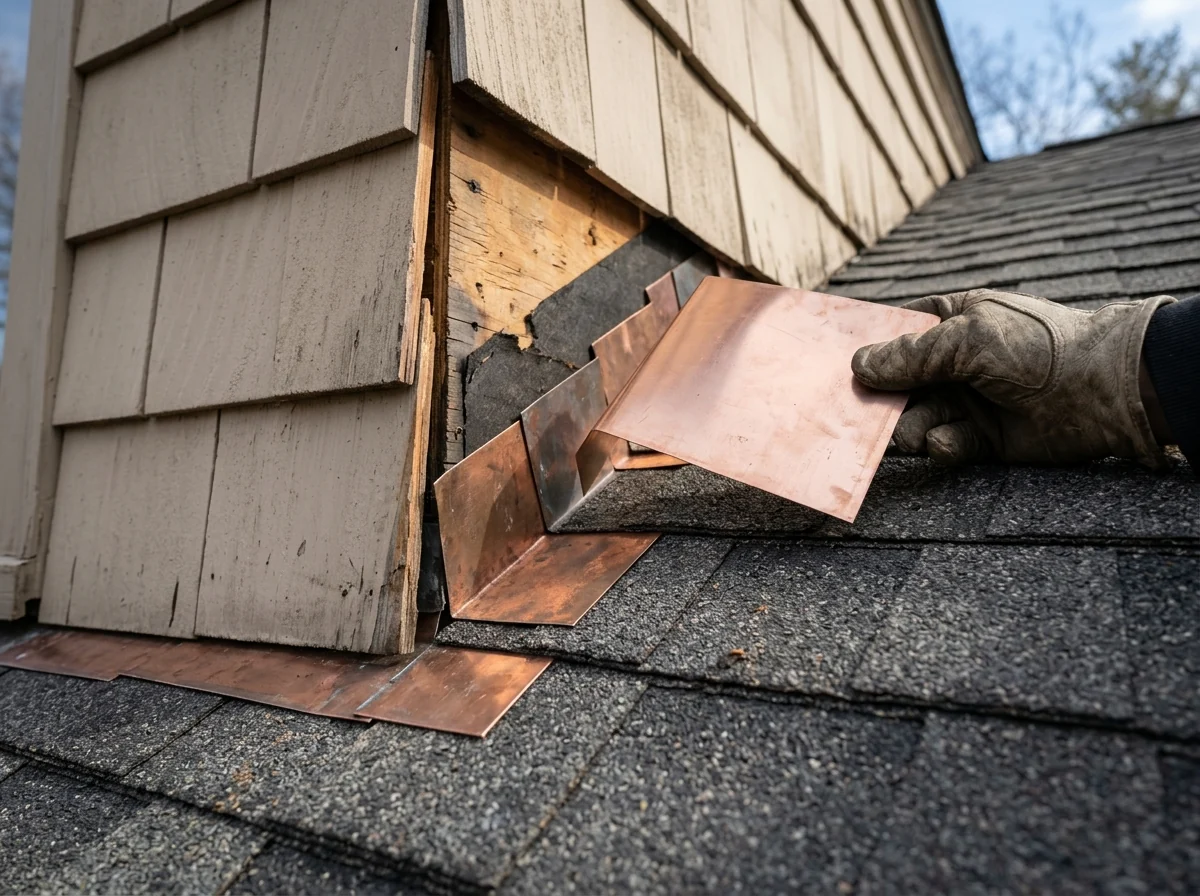
Step and Wall Flashing Repair
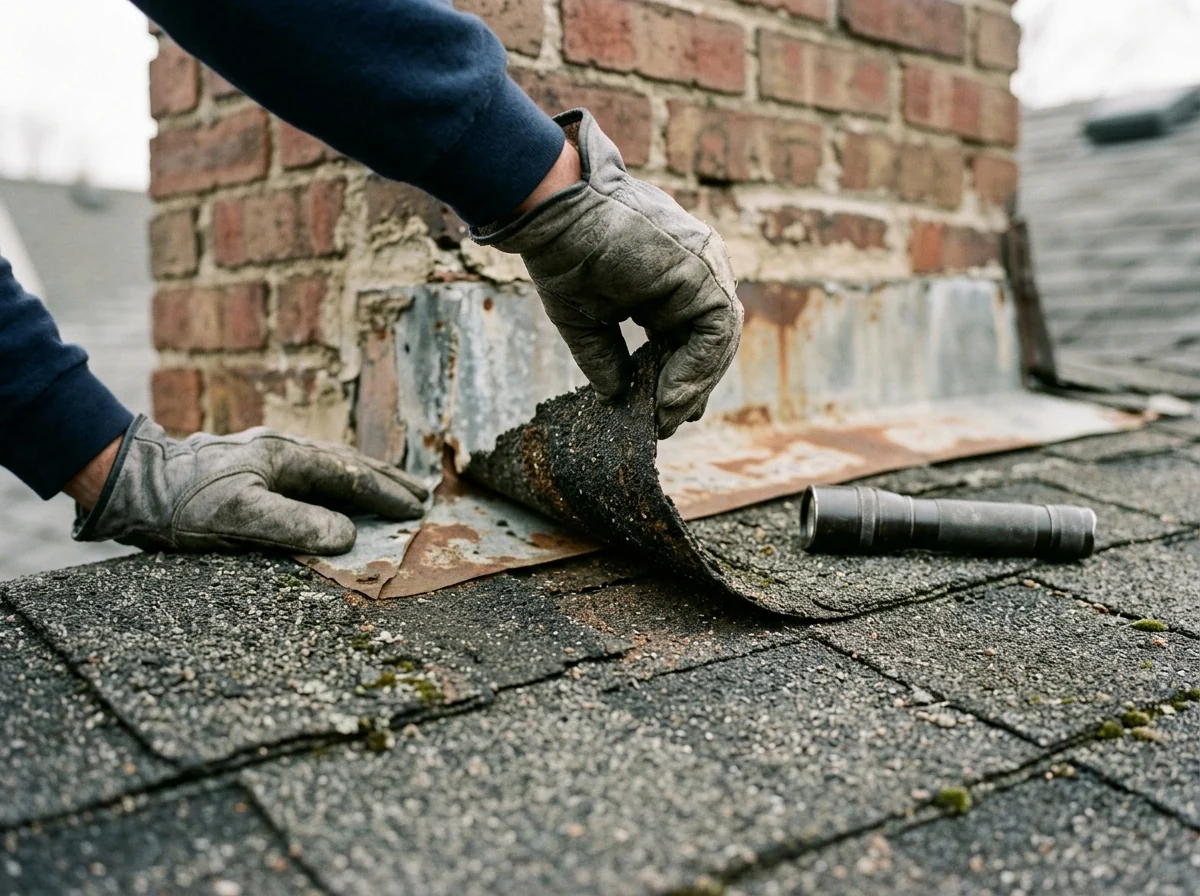
Where a roof slope runs into a wall, a dormer or a second-story addition, water gets kept out by step flashing. That's one L-shaped piece per shingle course, lapped like fish scales. Michigan's residential code requires the step-flashing method at sidewalls, with the last piece turned out to send water away from the wall. Old repairs on houses this age are often a bead of tar along the joint. It works for a season or two and then cracks. Fixing it right means lifting the siding or trim, pulling the shingles back and weaving new pieces in. HomeGuide puts flashing repairs at $200 to $500.
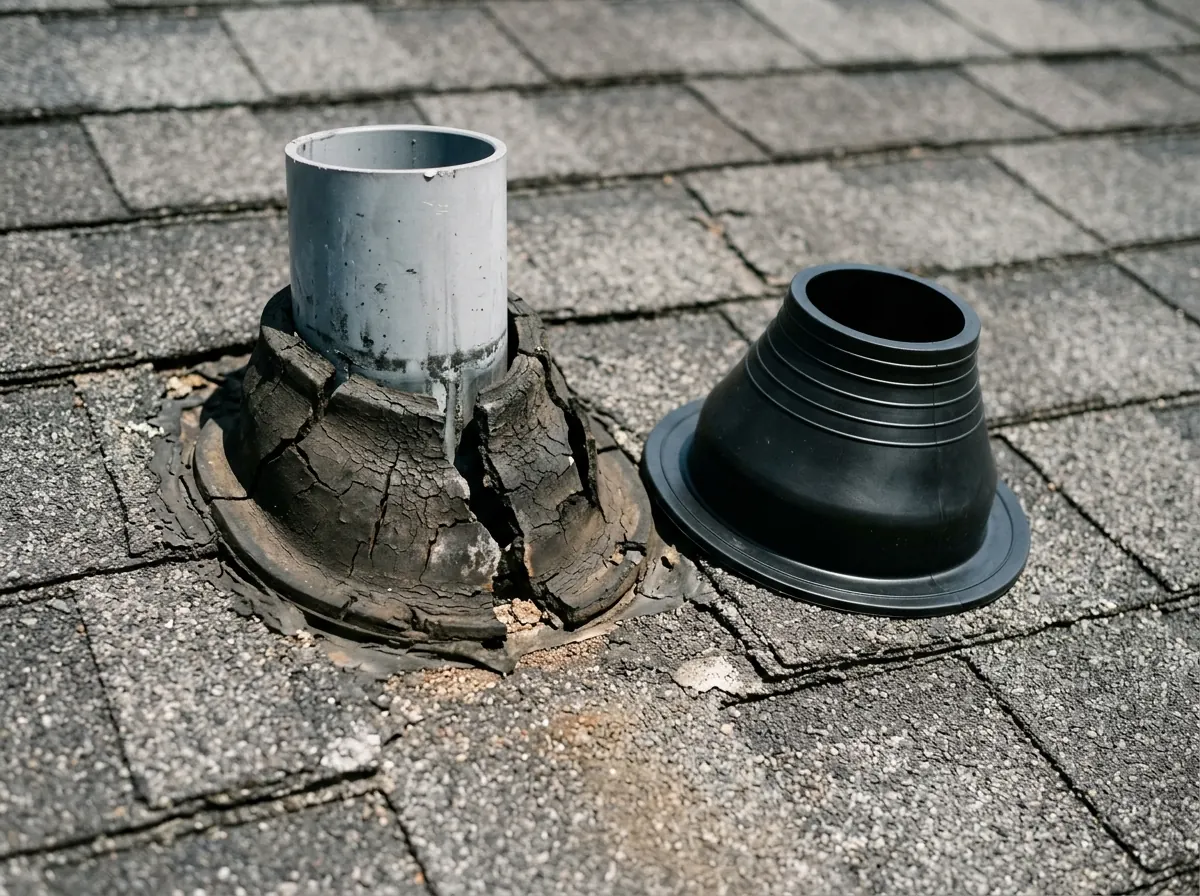
Pipe Boot and Vent Boot Replacement
Plumbing vents and bath fan stacks come through the roof inside a rubber-collared boot. The rubber is often one of the first parts of a roof to fail. It splits where the collar meets the pipe and lets water run down the outside of the pipe into the attic. The fix is a new boot slipped under the upper shingles, not caulk over the crack. HomeGuide lists a simple vent boot repair at $75 to $150. On a roof with four or five boots of the same age, replacing all of them in one visit saves the minimum charge later.
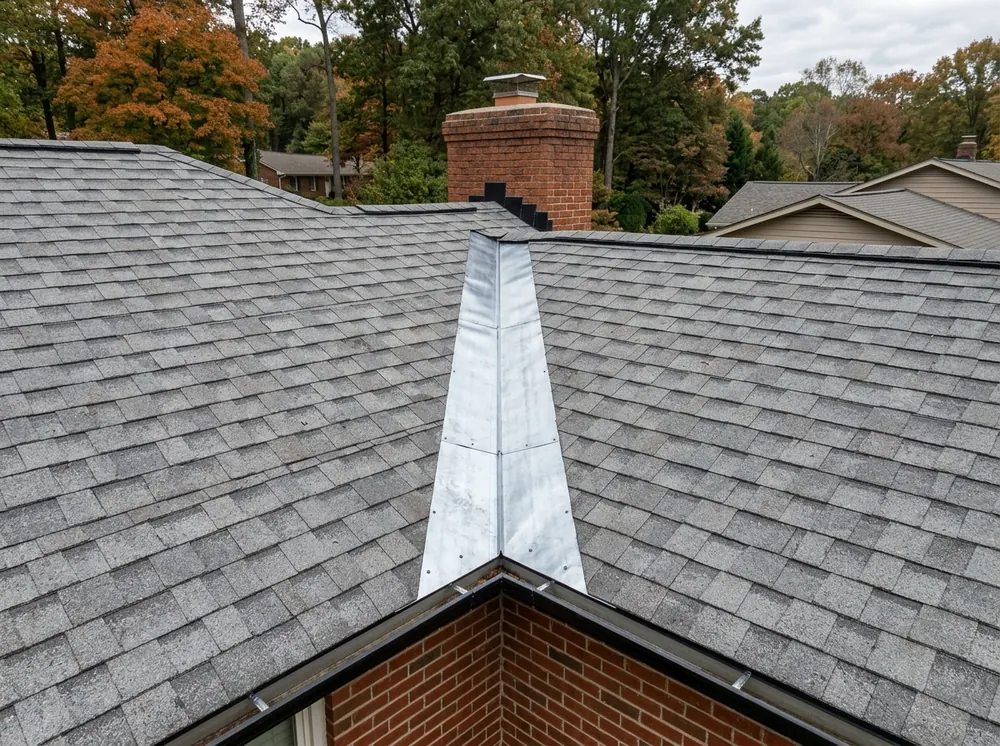
Valley Repair
A valley carries the water from two slopes, so it sees more water than any other spot on the roof. Debris piles up in it, shingles wear through, and nails driven too close to the center line open holes. Michigan's residential code says the valley lining goes in per the manufacturer's instructions before the shingles. A real valley repair means pulling the shingles on both sides, relining it with metal or membrane, and reshingling. HomeGuide prices valley repairs at $300 to $1,500.
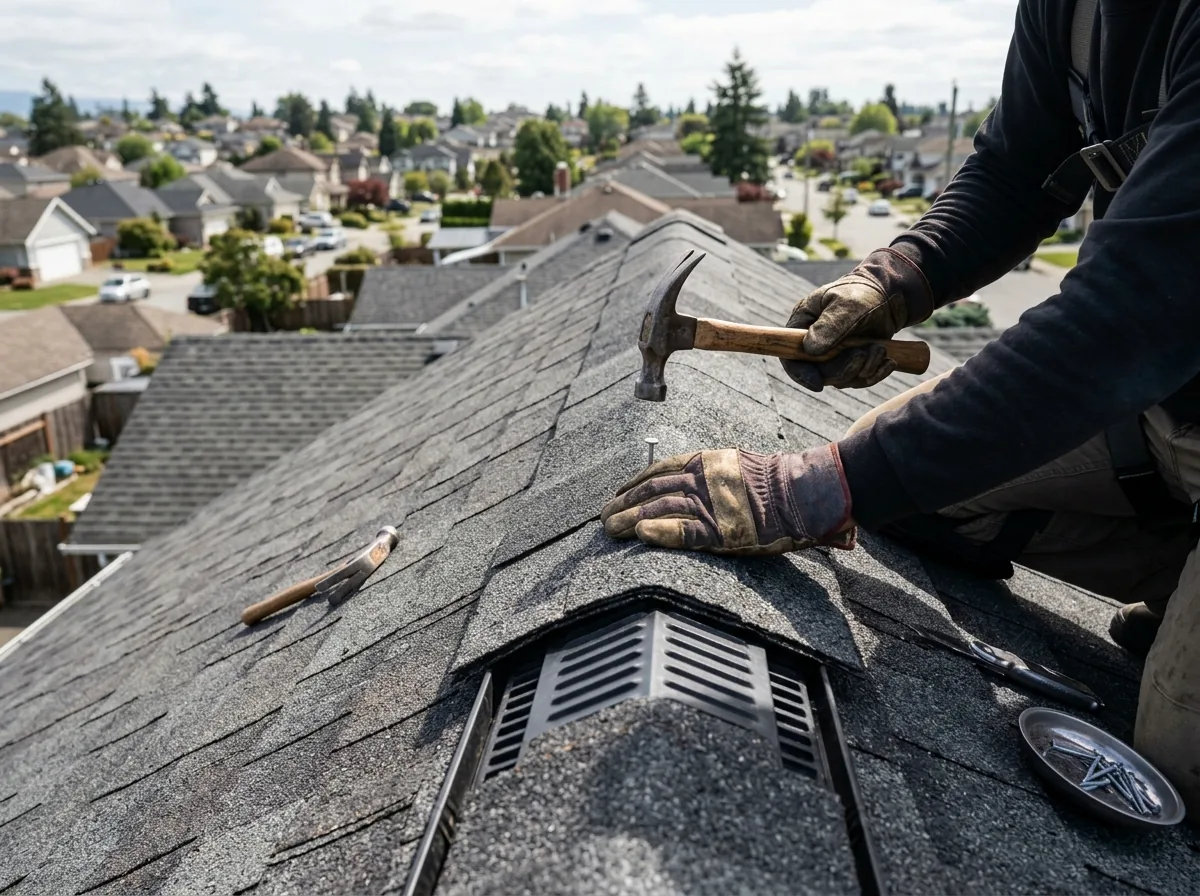
Ridge Cap Repair
The ridge cap sits at the highest and windiest line of the roof. Cap shingles can crack where they bend over the peak, and nails back out over time. If a ridge vent sits under the cap, a lifted cap lets driven rain and snow straight into the attic. Repair means new cap shingles on fresh nails, with the vent baffle checked while the cap is off.
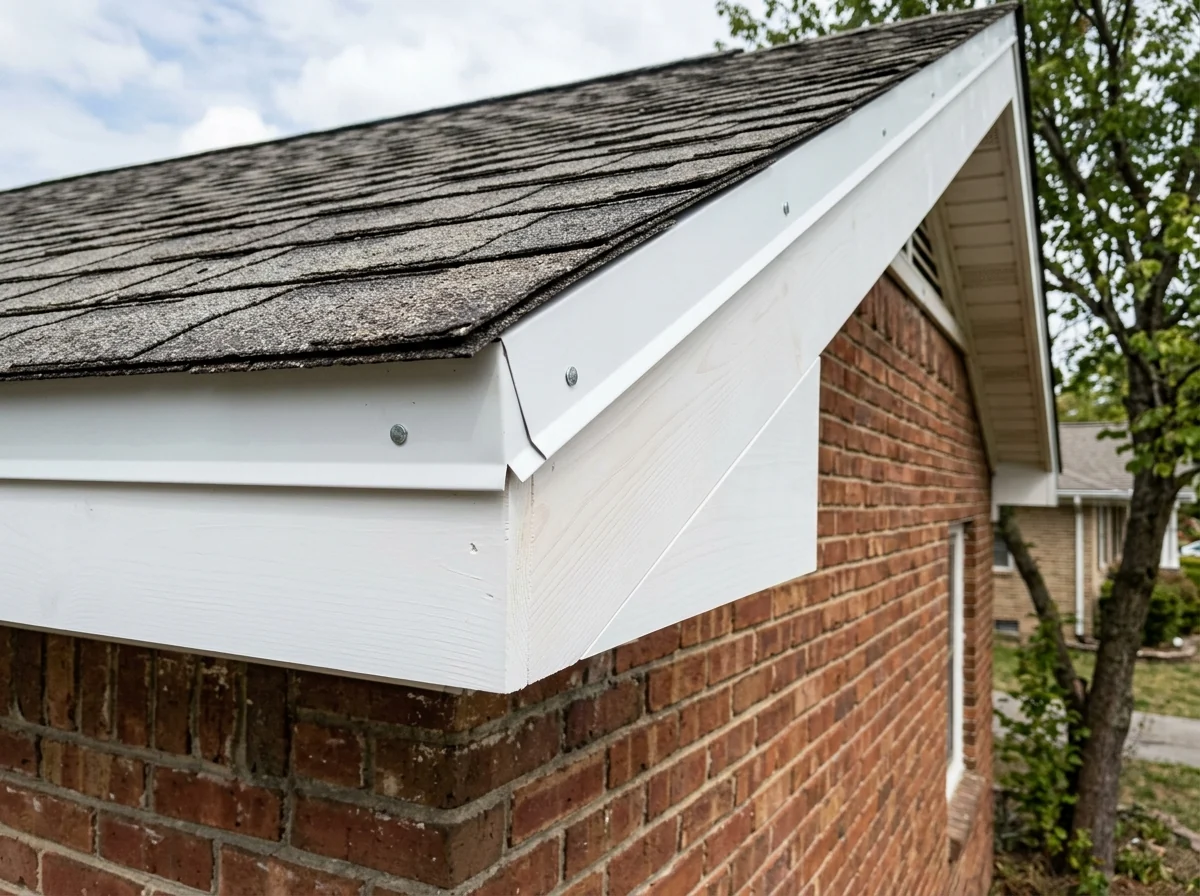
Drip Edge and Eave Repair
Drip edge is the bent metal strip at the roof's edge that kicks water out past the fascia. Code text from the International Code Council has it at both eaves and rakes, overlapped at least 2 inches, reaching at least 1/4 inch below the deck and nailed no more than 12 inches apart. The model code only began requiring it in the 2012 edition, so many older roofs never had it, and the deck along the eave is where the rot shows up. HomeGuide puts drip edge replacement at $1.50 to $9.00 per linear foot. If the fascia behind it has gone soft, that board gets replaced first.
Why Southfield homeowners call Southfield Elite Roofing
- Free roof inspection
- Written scope and price before work starts
- One local roofing contractor per request
- Southfield homes and buildings only
- No fee for homeowners
Roof Repair Process
- 1
Find the Failed Part
The contractor looks at the roof and in the attic, then traces stains back up the deck to where the water actually gets in. For a leak with no obvious source, see roof leak repair.
- 2
Price the Component
You get the repair in writing: which part, which materials, and what happens if the deck under it turns out to be soft.
- 3
Repair and Seal
New parts go in with the shingles woven and sealed around them. Michigan's residential code doesn't allow rusted or damaged vent flashing or counter flashing to be reused.
- 4
Photos of the Finished Work
Ask for before-and-after photos. You can't see most of these repairs from the ground.
Roof Repair or Replacement: How to Decide
A repair makes sense when one component has failed and the field shingles still lie flat, keep their granules and seal down. When the problems are everywhere, patching becomes a monthly bill. InterNACHI's estimates give about 20 years for 3-tab shingles and about 30 for architectural, so the shingle type and age set the baseline.
Signs that point toward a repair:
One leak, one spot
A single boot, a section of step flashing or one valley.Wind damage on a newer roof
A handful of missing shingles on a roof well short of its expected life.Flashing, not shingles
The shingles are fine but the metal around a wall or vent has failed.
Signs that point toward replacement:
Curling and granule loss across whole slopes
The shingles themselves are worn out.Repeat leaks in different places
Each repair buys a few months.Big repair numbers
HomeGuide's rules of thumb say replacement is often the better buy past $3,000 in repairs or 25% of the roof. At that point a replacement quote is worth having next to the repair quote.
Things to Know About Roof Repair in Southfield
Freeze-thaw does the damage. NWS normals for Detroit give a January average of 19.2°F at night and 32.3°F by day. A roof that crosses freezing day after day works every loose nail and every cracked boot, so small openings get bigger over one winter.
Older roofs carry older repairs. With Southfield's median home built in 1969 (Census ACS), many roofs here have been re-flashed with tar at least once. A tar patch hides what's under it, and the right fix often starts with scraping it off.
Know when to call it an emergency. Water coming through a ceiling fixture or a limb through the deck needs a tarp first and a repair second. See emergency roof repair.