
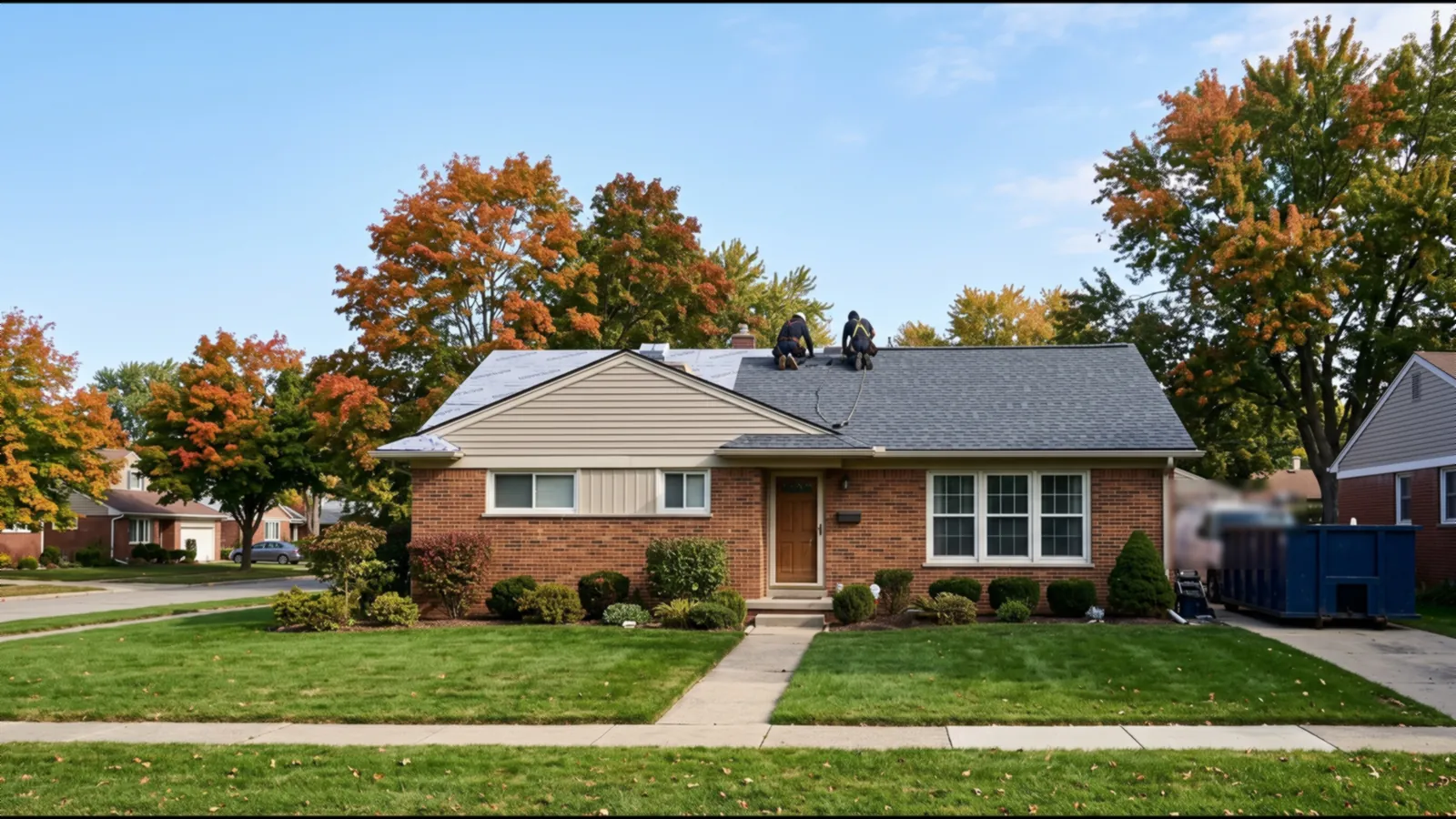
Emergency Roof Repair Services
These five jobs cover the first day after something goes wrong. The permanent fix comes after; see roof leak repair and storm damage roof repair.
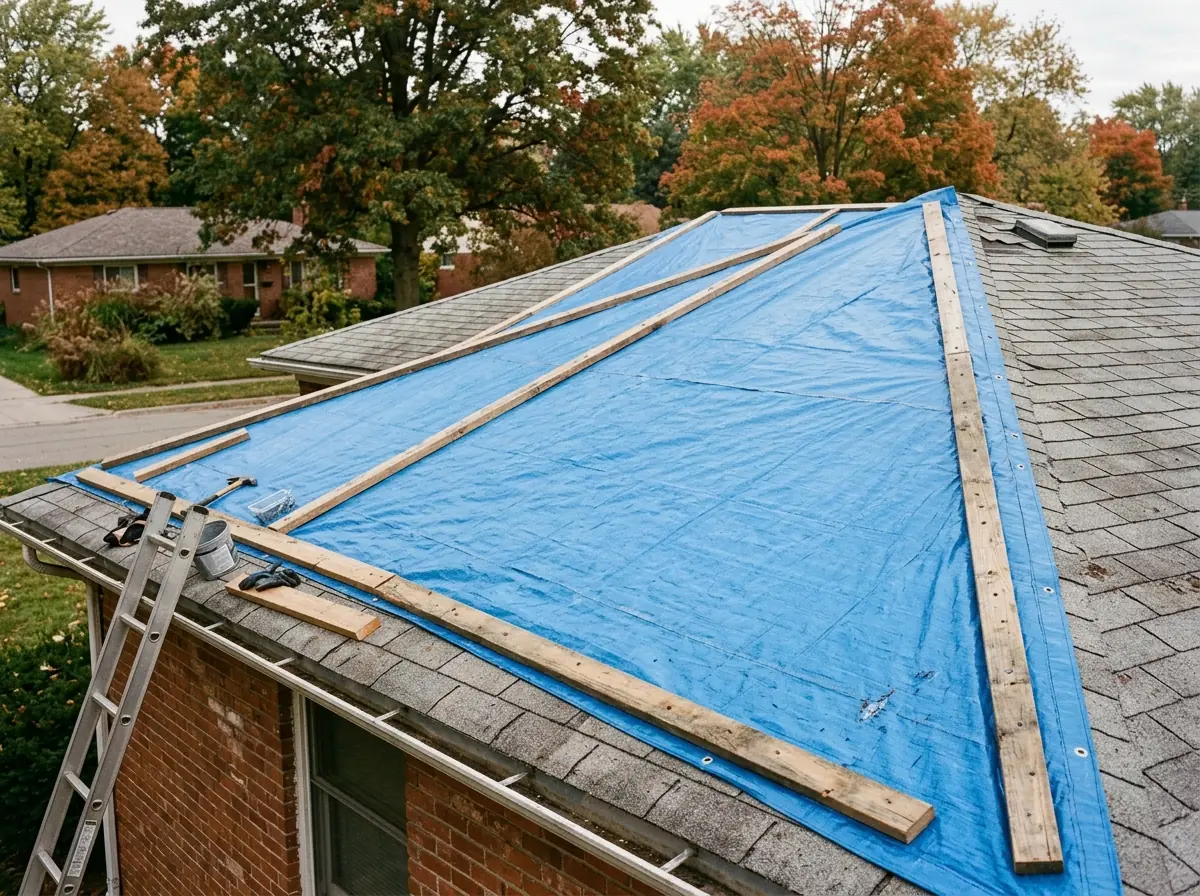
Emergency Roof Tarping
A tarp that works goes over the ridge, so water can't run under its top edge, and is held by 2x4 battens screwed through the tarp into the deck. Sandbags or a few nails through the plastic tear loose in the next gust. The tarp should extend past the damage on every side, and the battens sit where the shingles get replaced later anyway. Tarp thickness matters if the permanent repair is weeks away. HomeGuide says a heavy 10-mil tarp can hold for up to 2 years, while thinner ones last up to 3 months.
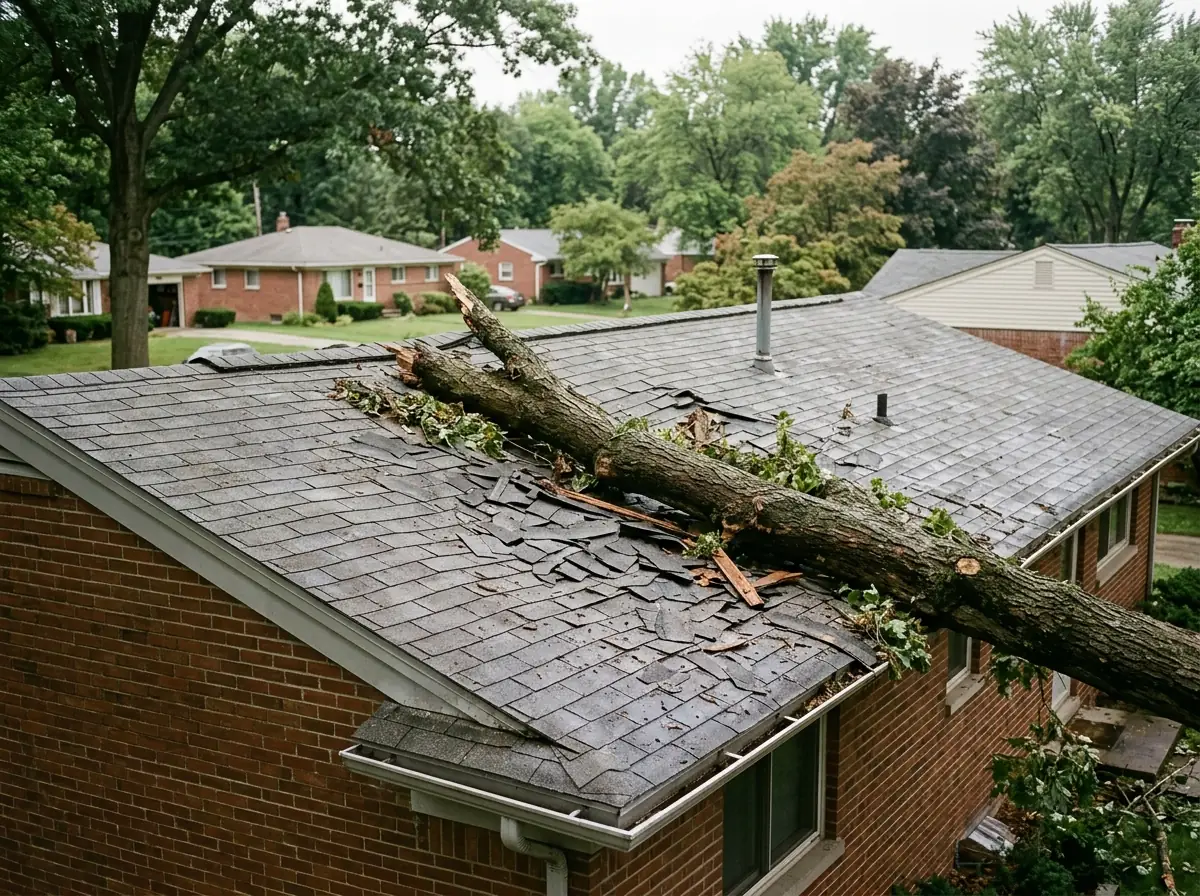
Tree or Limb on the Roof
First check for wires. If a line is down or tangled in the branch, stay at least 25 feet away, call 911 or DTE Energy at 800-477-4747, and assume it's live even if it isn't sparking. A heavy limb isn't just pulled off the roof. Cutting it in place can drop the weight through the deck, so it's cut in sections from the top down, sometimes with a tree crew. Once it's off, the roofer checks the rafters and decking from the attic, then tarps or boards the opening.
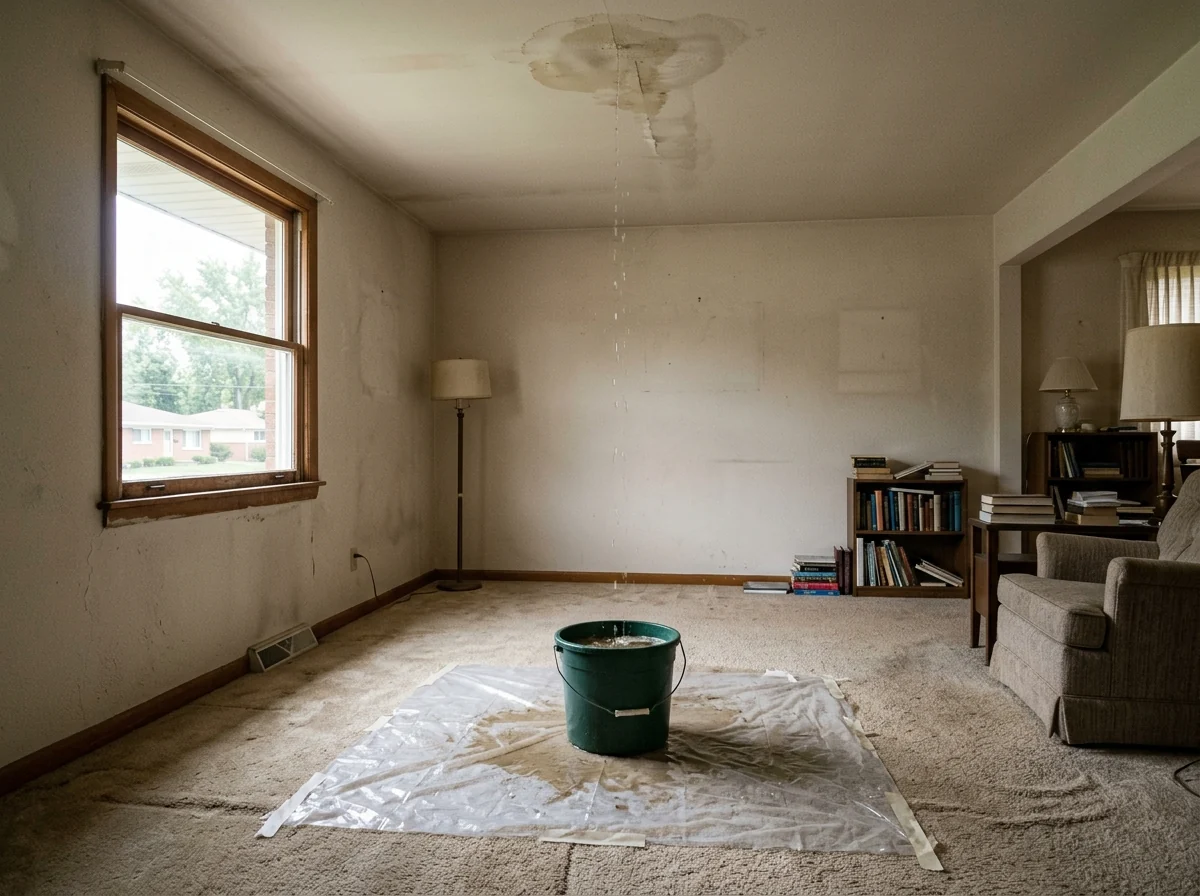
Active Leak Containment
Inside, the goal is to keep a leak in one place. Spread plastic, move furniture and electronics out of the drip line, and put a bucket or bin under the drip. If water is running near a light fixture, a ceiling fan or an outlet, shut that circuit off at the breaker panel and leave it off until an electrician says otherwise. Water in the attic spreads along the top of the drywall, so a second stain often shows up a few feet from the first. Put towels and a bucket there too.
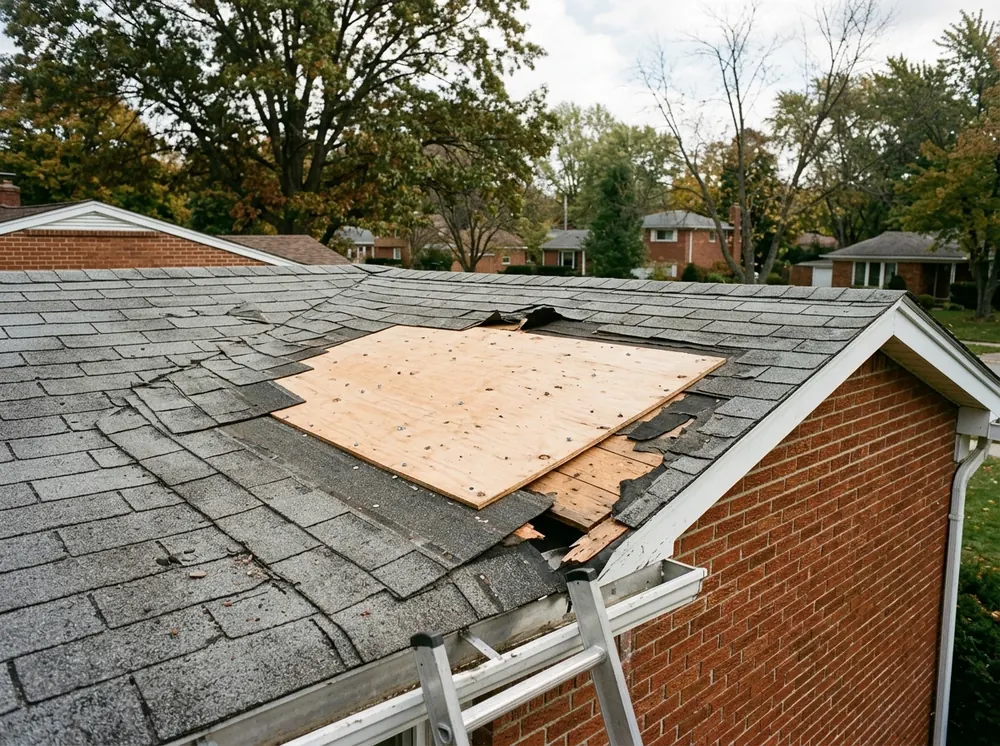
Wind Blow-Off Board-Up
When the wind takes shingles and some decking with them, a tarp alone sags into the hole and holds water. The roofer screws plywood over the opening first, then covers it with underlayment or a tarp lapped under the shingles above. If only shingles blew off and the deck is sound, a strip of self-adhering membrane can seal the bare deck until matching shingles arrive. Collect any blown-off shingles from the yard. They help match the color later.
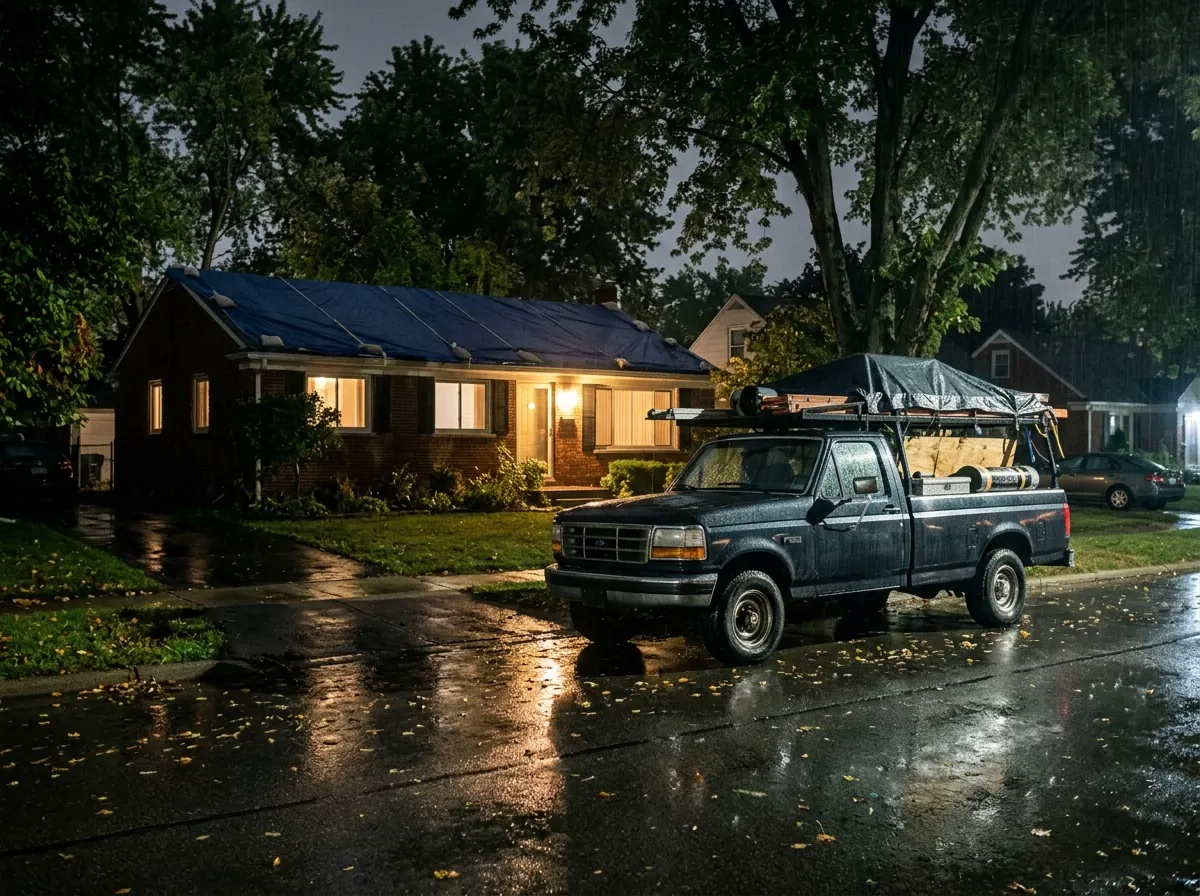
After-Hours Storm Response
When you call, the request goes straight to the contractor; how fast a crew can get there depends on the weather, the hour and how many roofs the storm hit. Climbing a wet roof in the dark or in lightning is dangerous, so at night the first step is often inside containment, with tarping at first light. HomeGuide lists after-hours tarping at $1.00 to $2.80 per square foot, plus a possible $100 to $200 call-out fee.
Why Southfield homeowners call Southfield Elite Roofing
- Free roof inspection
- Written scope and price before work starts
- One local roofing contractor per request
- Southfield homes and buildings only
- No fee for homeowners
Emergency Roof Tarp Cost
HomeGuide's national estimate for tarping a roof is $175 to $700, or $0.70 to $2.00 per square foot installed during regular hours. After-hours work runs higher, as above. Size, pitch, a second story and debris removal raise the cost. These are estimates. Ask for an itemized invoice for the emergency work, separate from the permanent repair estimate, so an adjuster can see what was temporary.
Emergency Roof Repair or a Routine Call: How to Tell
Not every leak needs a crew tonight. A rough guide:
Call now
A hole you can see daylight through, a limb on the roof, a section of decking blown off, water running near light fixtures or outlets, or a ceiling that's bulging with water.Call today
A steady drip in one spot, shingles missing from a slope after a storm, or a cracked skylight with rain in the forecast.Book an inspection
A stain that appeared and dried, a few shingles in the yard but no leak, or granules in the gutters after hail.
When in doubt, describe what you see when you call and send photos. A cheap tarp tonight costs less than a wet attic, wet insulation and a ceiling that has to come down.
Emergency Roof Repair: The First Hour
- 1
Get Safe
Stay off the roof in wind, ice or lightning. Keep away from downed wires and from any ceiling that sags with water.
- 2
Take Photos Before Anything Moves
Photograph the roof from the ground, the limb or hole, and every wet room inside. Photos taken before the tarp goes on show the damage as the storm left it.
- 3
Call Your Insurer and Protect the House
Michigan DIFS expects policyholders to report a loss promptly and to take reasonable action to keep it from getting worse, such as boarding up or covering damaged property. Emergency tarping and board-up are that reasonable action.
- 4
Keep It Temporary
DIFS also advises holding off on permanent repairs until the insurer has inspected or tells you to proceed. The permanent fix gets scoped in writing once the roof is dry and safe to walk.