
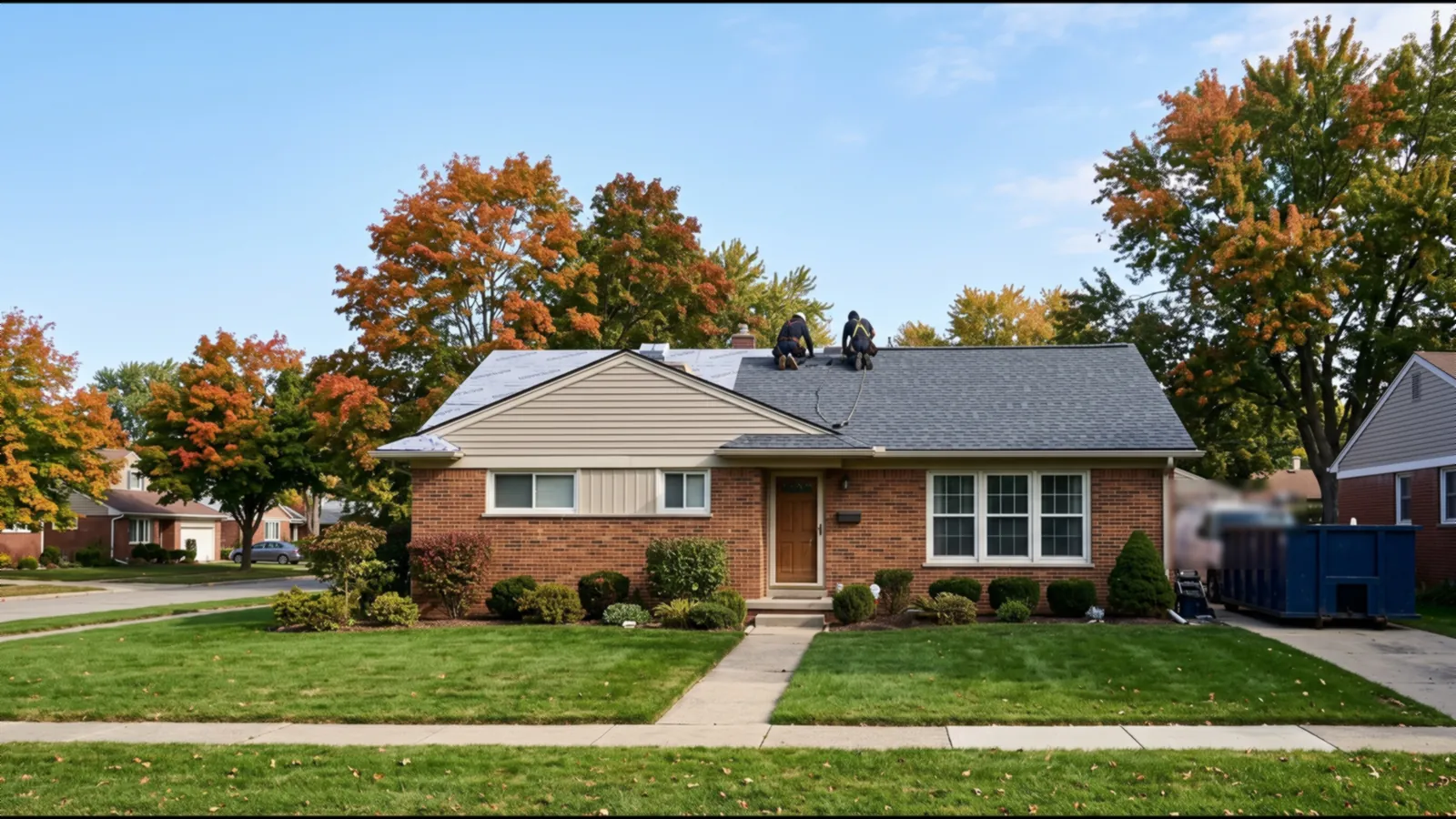
Roof Leak Repair by Where the Water Gets In
Most leaks start at a joint in the roof: a pipe, a valley, a skylight curb or a lifted tab. These are the entry points a roofer checks, and how each one shows itself.
Leak Detection and Water Testing
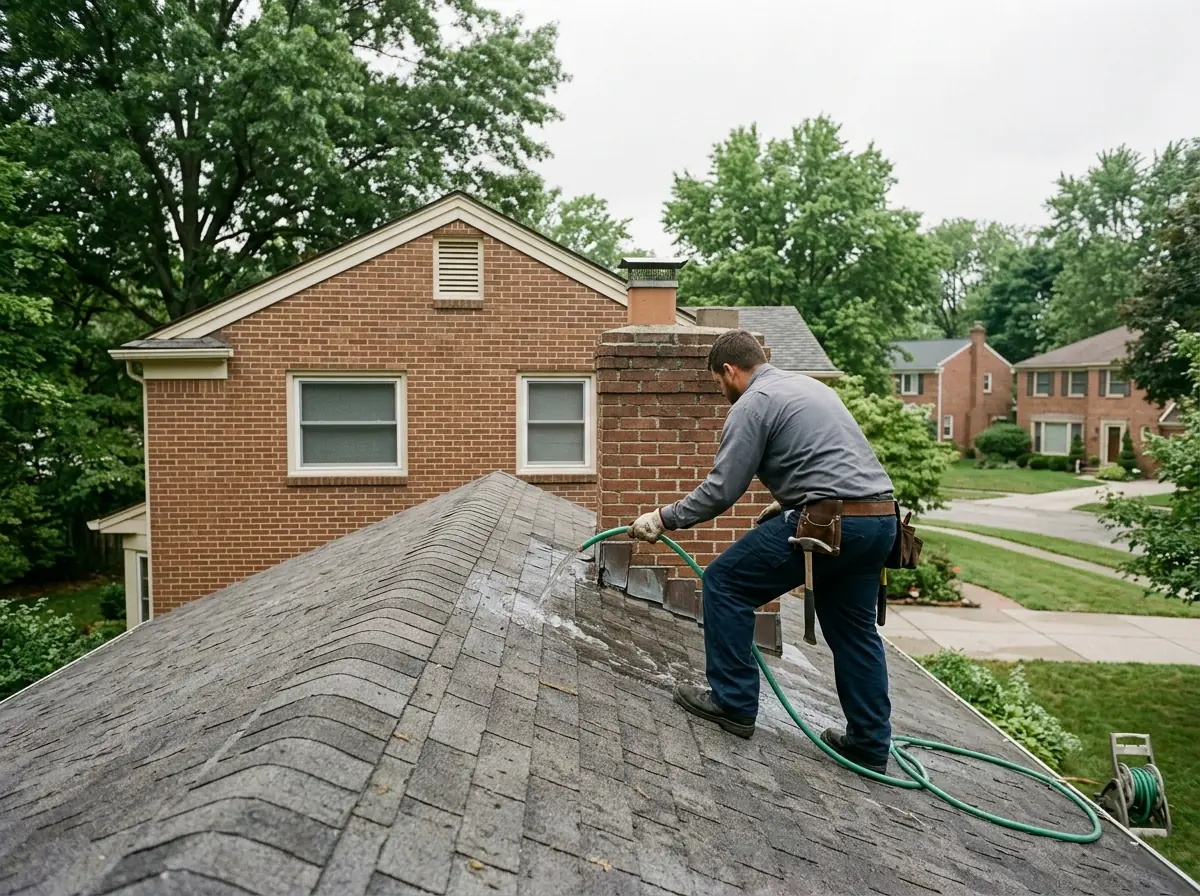
When a leak only shows up in some storms, a water test pins it down. One person runs a hose over a small section of roof, starting low and moving up, while a second person watches the attic or the ceiling below. Each section gets several minutes before the hose moves. It's slow, but it tests one suspect at a time instead of replacing three things and hoping. A leak that only appears with wind-driven rain from one direction may need the hose aimed sideways under a flashing edge to show itself.
Leaks at Plumbing Vents and Penetrations
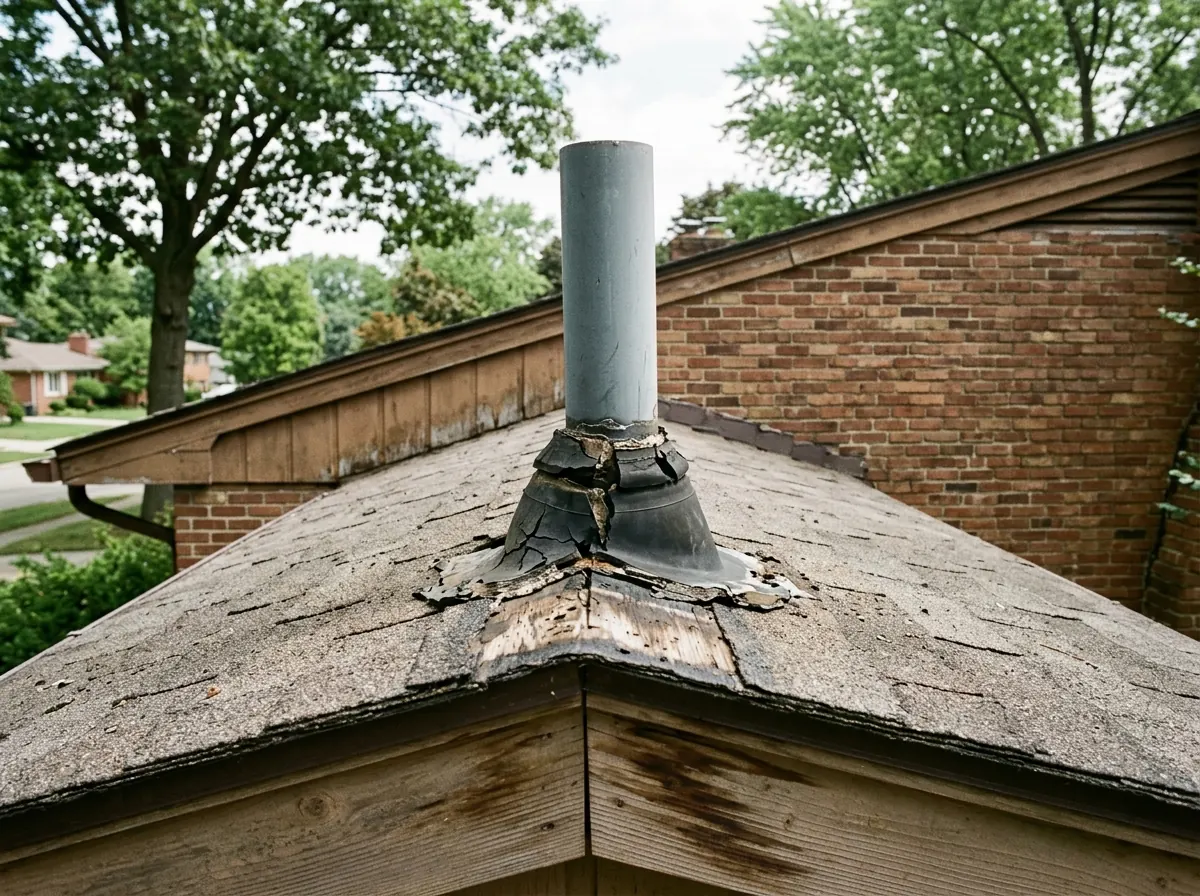
A leak at a penetration has a signature: the water shows up right next to the pipe or vent in the attic, often running down the outside of the pipe itself, and the stain on the ceiling below is usually close to a bathroom or the kitchen. Gas appliance vents with a loose metal storm collar drip the same way. In the attic, look for a dark ring on the deck around the pipe hole, or rust streaks on a metal vent. If the deck around a vent is dry but the insulation below is wet, check whether it's condensation running down a bath fan duct that vents into the attic instead of through the roof. That's a ventilation fix. The part swap itself is on the roof repair page.
Valley Leaks
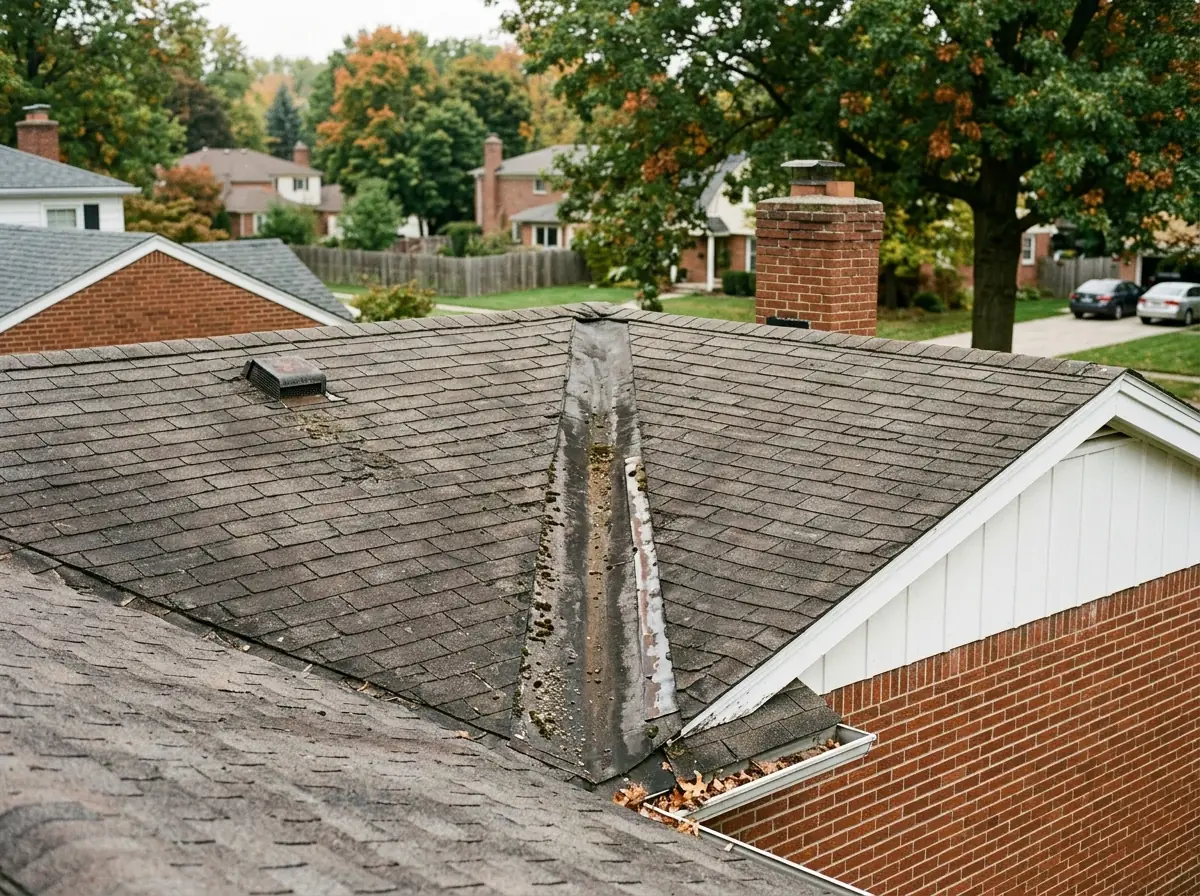
Valley leaks tend to show up in the heaviest rains and in spring thaw, when the valley is carrying the runoff from two slopes at once. The ceiling stain usually lands near an inside corner of the house, where an addition, a garage roof or a dormer meets the main roof. From outside, look for a line of leaves or ice packed into the valley, shingles cut short of the center so the lining shows, or a row of nail heads near the middle. In the attic, the wet streak runs along the valley rafter, the angled board under the valley, before it drips. A leak that appears only while snow melts out of a north-facing valley is more likely ice backing up than a failed lining.
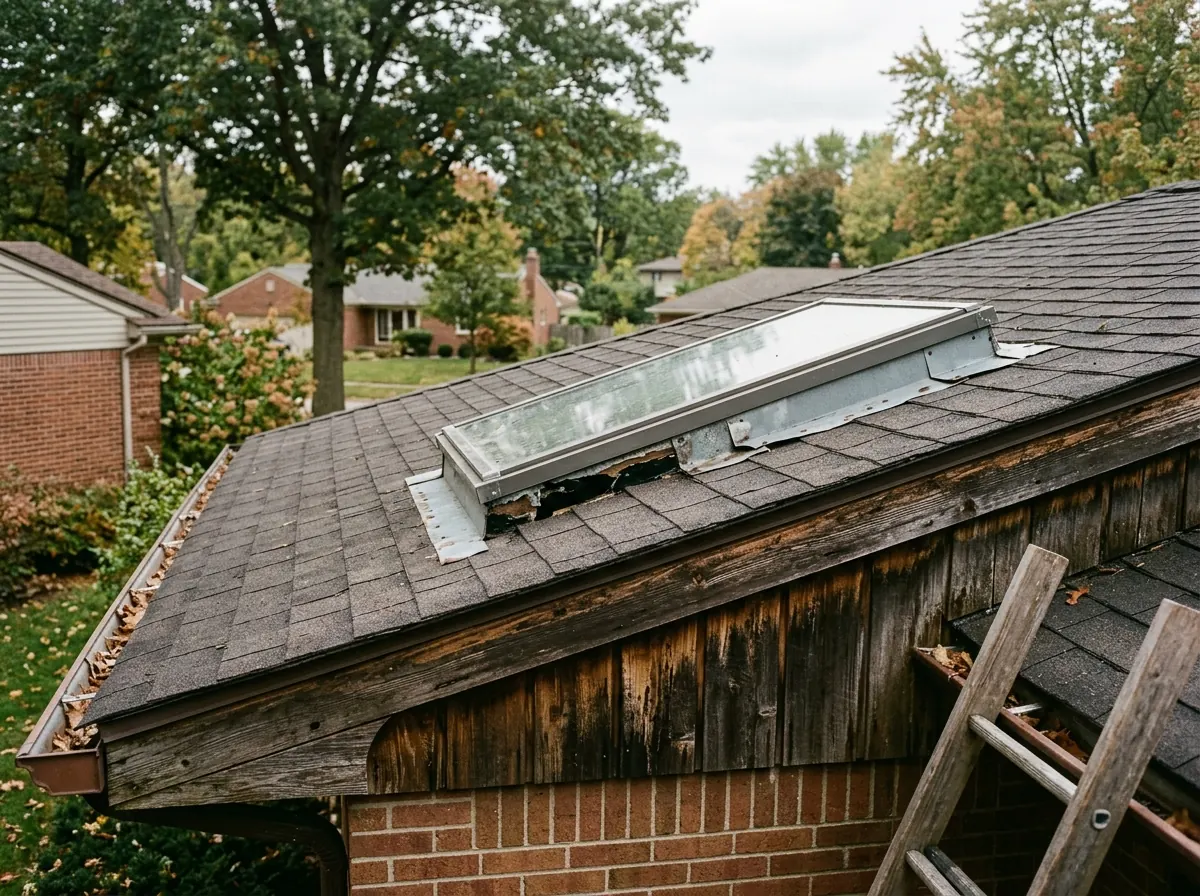
Skylight Leaks
Skylight leaks are usually flashing leaks: the step flashing along the curb sides, the head flashing on the uphill side where debris collects, or roof cement used instead of a flashing kit. Condensation on the glass can look like a leak, too. If water appears on the coldest mornings and not during rain, check that first. HomeGuide puts skylight leak repair at $225 to $800. An old unit is often better replaced than resealed; see skylight installation and repair.
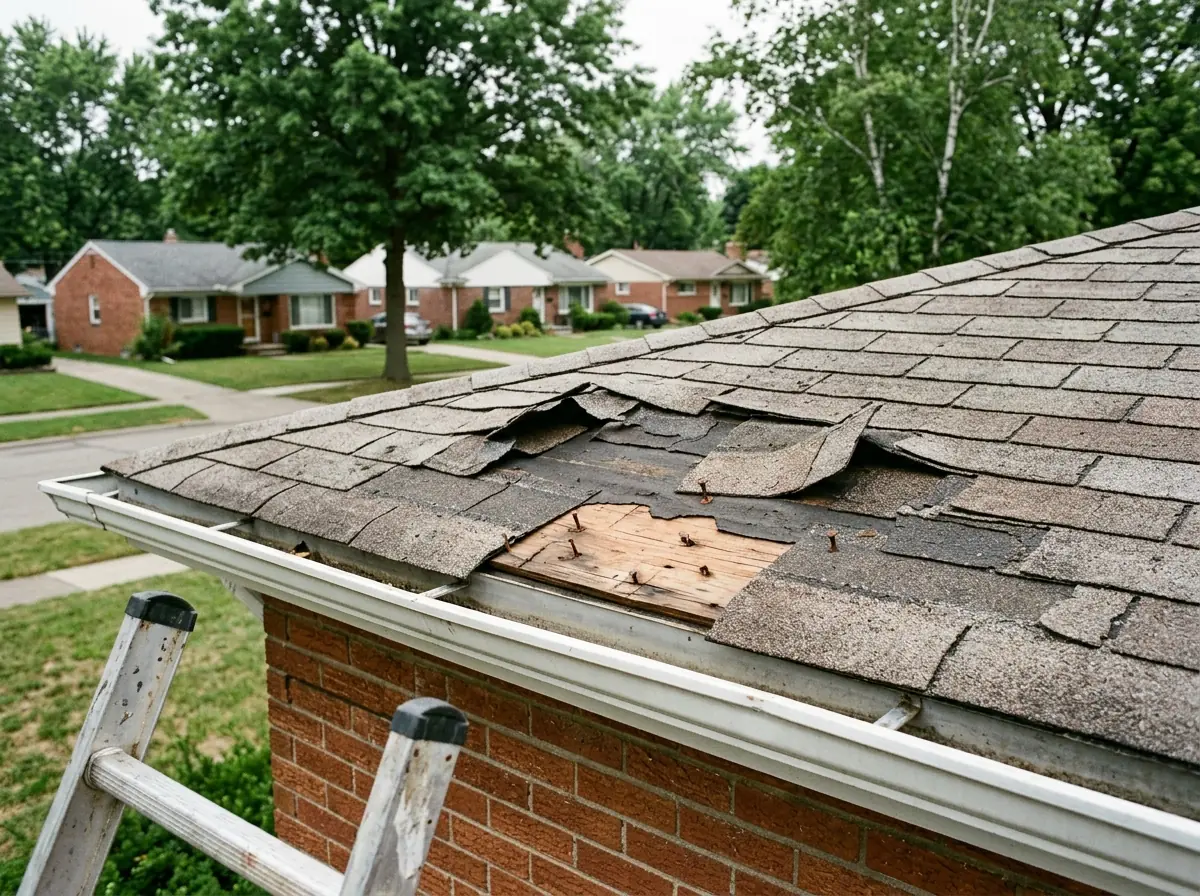
Leaks From Wind-Lifted Shingles
A wind-lifted shingle leaks only when rain comes from the same side, so these leaks are hard to catch. The storm-day pattern is the clue: a stain that grows during a rain with strong wind from the west, then stops when the wind changes. Water enters at the nail line once the sealant strip lets go and the tab folds back. From the ground, binoculars show creased tabs or a row of shingles that sits a little proud of the rest. Nail pops, where a nail backs out and lifts the shingle above it, leak the same way without any wind at all. If the wind tore off whole sections, that's storm damage roof repair.
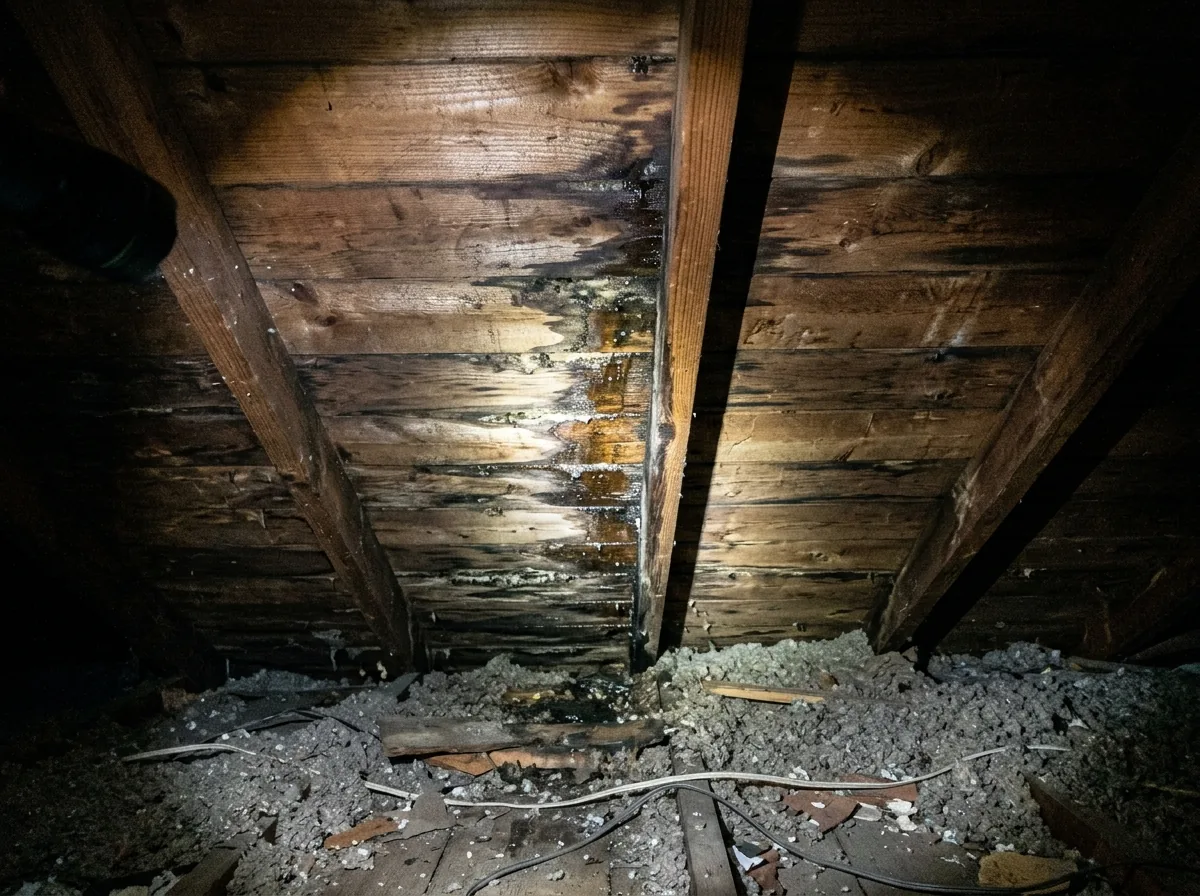
Ceiling Stain Diagnosis From the Attic
The attic tells more than the ceiling does. Go up during or right after rain with a flashlight and follow the wet streak uphill on the underside of the deck to where it starts. Rusty nail tips poking through the deck, wet insulation, a dark ring around a vent pipe and daylight around a penetration all point to the source. Frost on the nail tips in January that drips when it thaws is a ventilation problem, not a leak. A water stain that only appears in late winter along the outside wall points to ice dams; see ice dam removal.

Why Southfield homeowners call Southfield Elite Roofing
- Free roof inspection
- Written scope and price before work starts
- One local roofing contractor per request
- Southfield homes and buildings only
- No fee for homeowners
Roof Leak Repair Cost by Leak Source
HomeGuide's 2026 national estimates for common leak repairs:
Roof vent leak
$100 to $500.Missing shingles
$100 to $300.Nail pops
$200 to $500.Skylight leak
$225 to $800.Cracked pipe boot
$250 to $600.Leaking valley
$300 to $1,500.Metal gas vent collar
$400 to $1,500.
These are estimates, not quotes, and they come from HomeGuide's leak-repair guide, which can run higher than the plain part prices on the roof repair page. Ask what the line item includes. Steep pitch, two-story access and rotted decking under the leak push the number up. Chimney leaks have their own page: chimney flashing repair.
Roof Leak First Aid: The First 48 Hours
- 1
Catch the Water
Put a bucket under the drip. If the ceiling drywall is bulging with water, poke a small hole in the low point so it drains into the bucket and the ceiling doesn't come down on its own.
- 2
Dry What Got Wet
The EPA says to dry water-damaged areas and items within 24 to 48 hours to prevent mold. Pull wet insulation, run fans and a dehumidifier, and move belongings out of the drip line.
- 3
Mark the Spot and Take Photos
Photograph the ceiling stain, the attic above it and the weather that day. If you know it only leaks in a north wind, tell the roofer. That one detail can save an hour of water testing.
- 4
Get the Source Fixed, Not Just the Stain
Painting the ceiling before the roof is fixed hides the evidence. If water is coming in fast or there's a hole in the roof, that's an emergency roof repair call.