
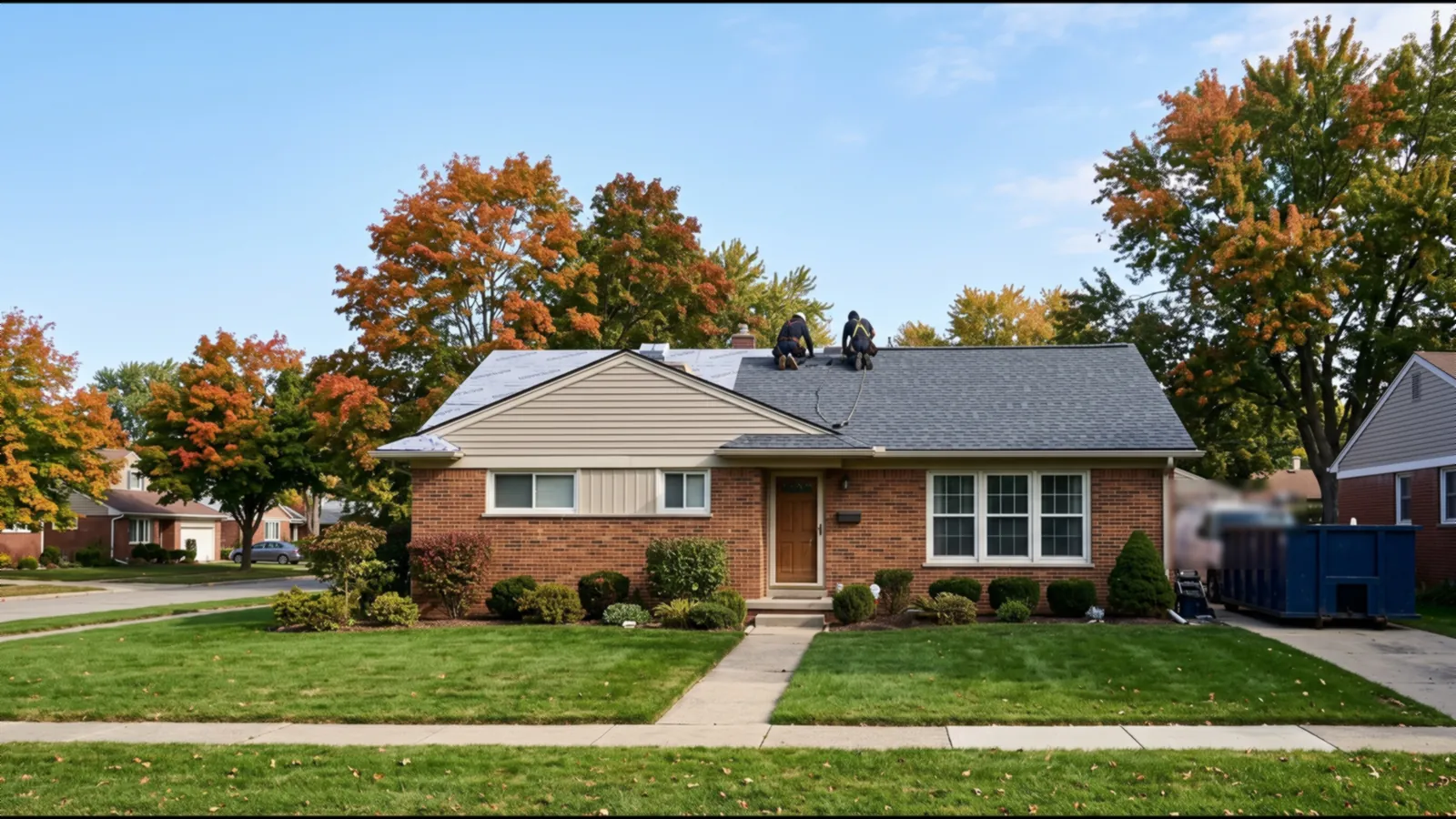
Chimney Flashing Repair Types
The flashing, the cricket, the cap and the crown each close one path for water. These are the five pieces a chimney leak usually comes down to.
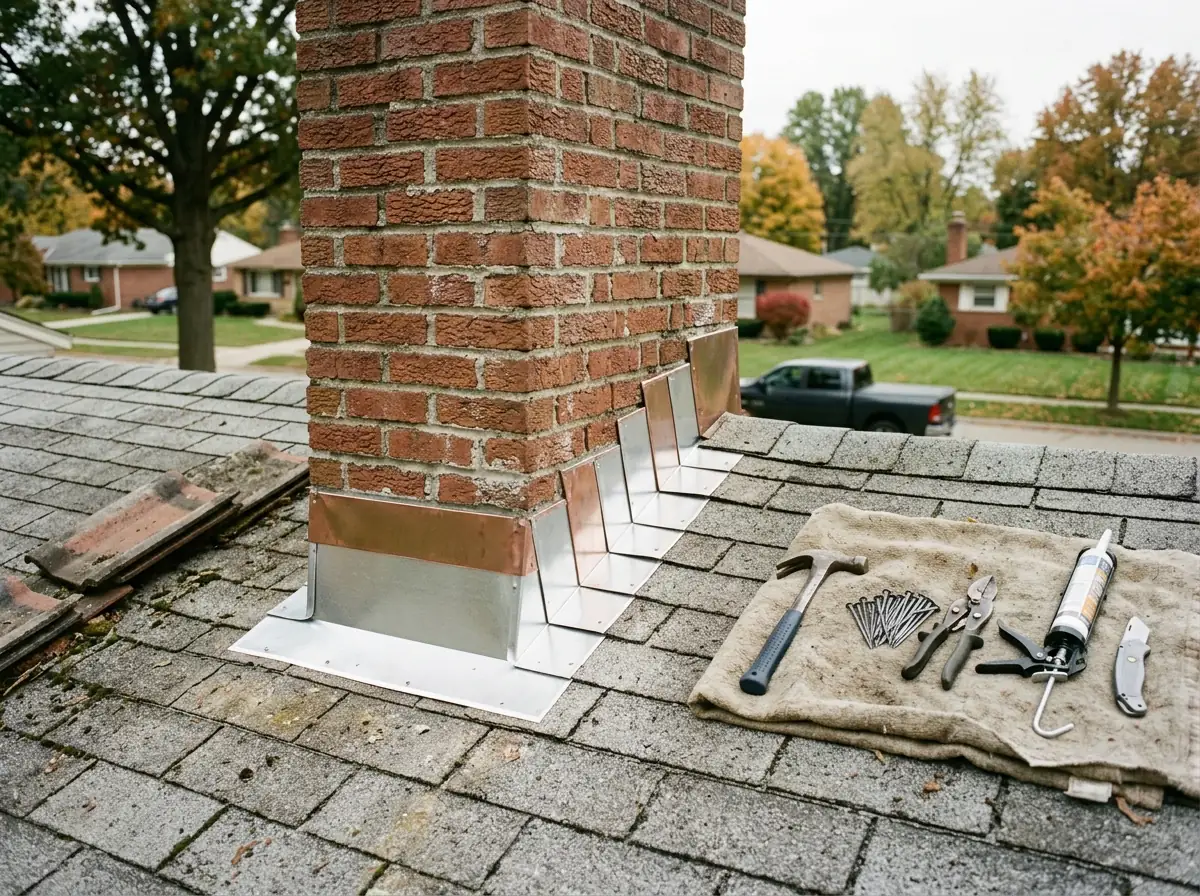
Step and Counter Flashing
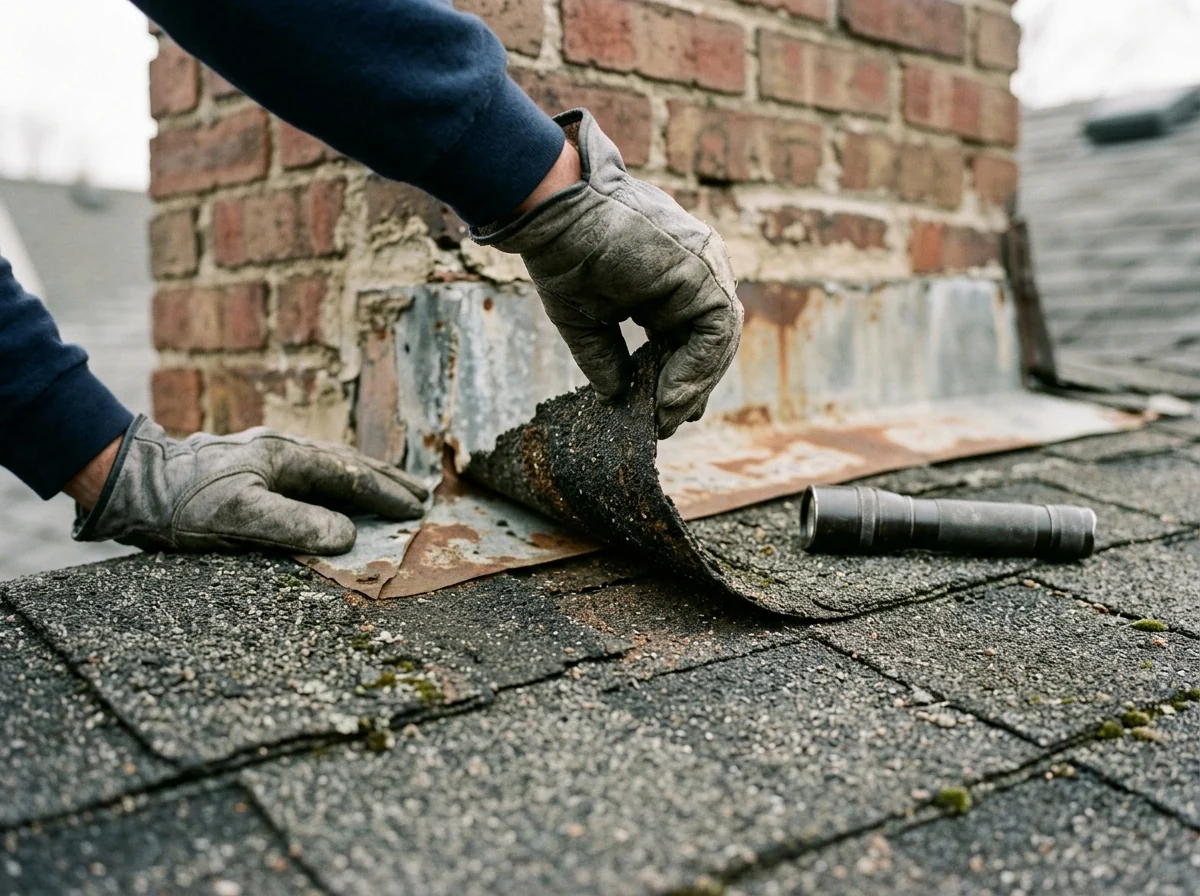
Along the sides of the chimney, L-shaped step flashing pieces are laid one per shingle course, each one lapped over the one below, like the shingles themselves. Counter flashing then laps down over the top edge of the step flashing from the brick. The two aren't fastened to each other, so the chimney and the roof can move separately without tearing the seal. A front apron covers the downhill face. When a re-roof happens, the Michigan Residential Code says counter flashing that's rusted or damaged can't be reinstalled, so on an older chimney, expect new metal. Leaks from the sides show up as stains on the ceiling or wall next to the chimney.
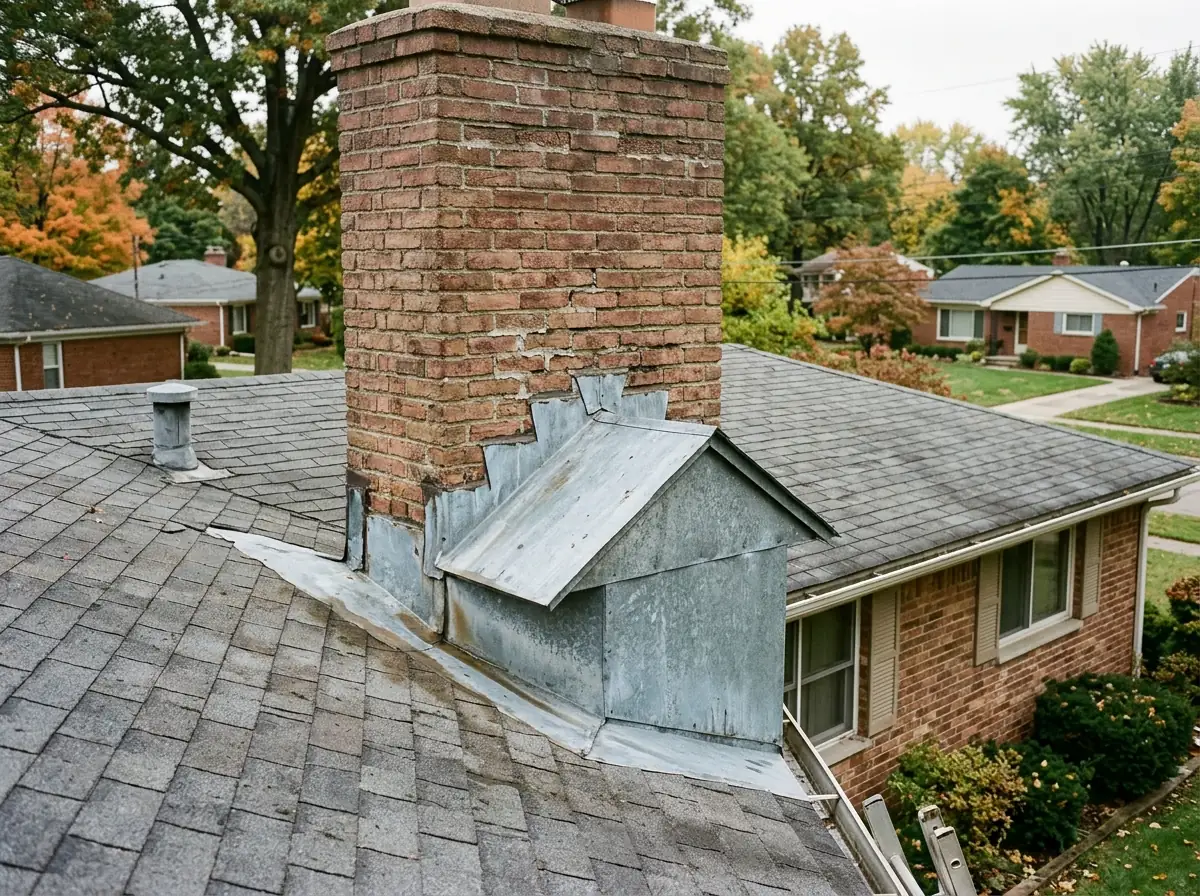
Chimney Cricket (Saddle)
The back of a chimney is a dam. Water and snow coming down the roof pile up against it. A cricket is a small peaked roof framed behind the chimney that splits the flow around both sides. Under the Michigan Residential Code, any chimney wider than 30 inches needs a cricket on its uphill side, covered in sheet metal or the same material as the roof. If yours is wide and leaks from the back in late winter, a missing cricket is the first suspect.
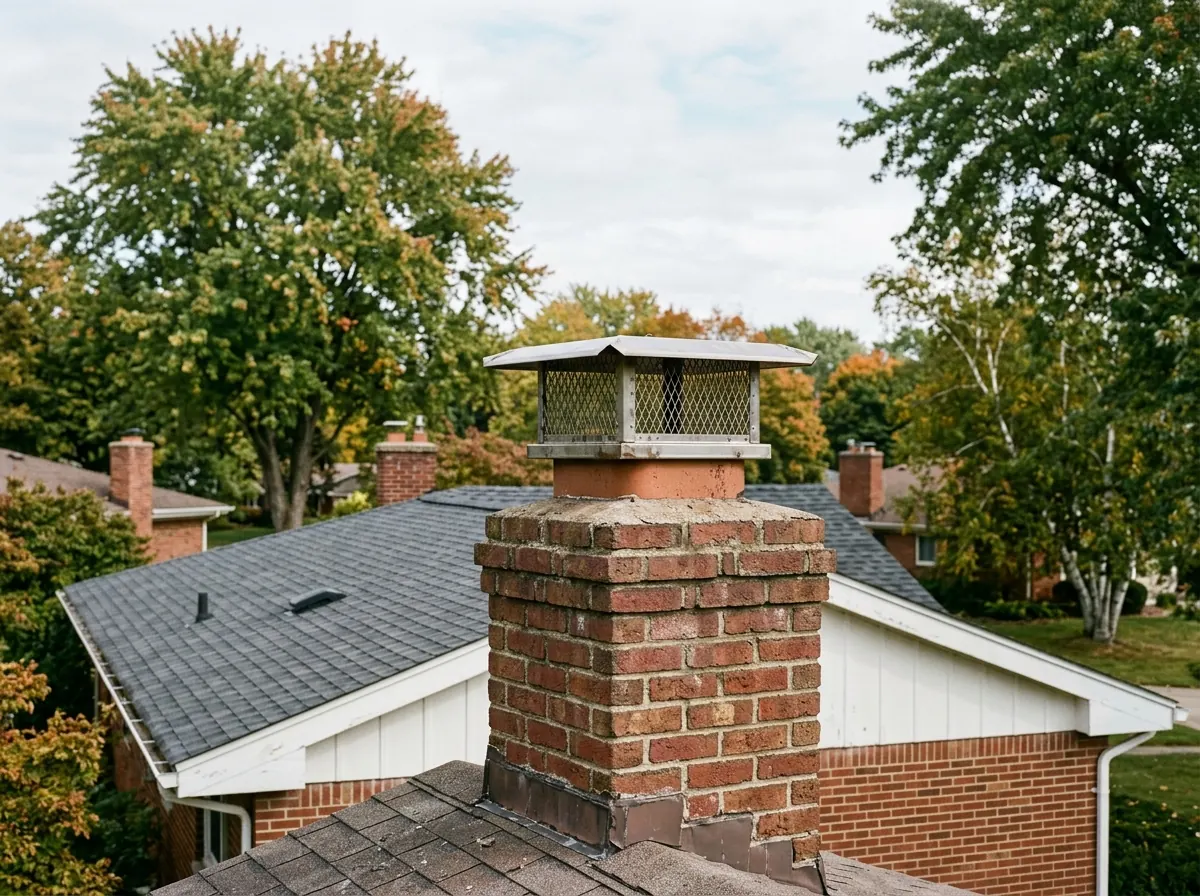
Chimney Cap Installation
An uncapped flue is an open pipe that funnels rain straight down the inside of the chimney. The Chimney Safety Institute of America (CSIA) calls a cap the least expensive way to prevent water damage, and notes that a well-built cap keeps out birds too. The mesh sides also stop squirrels and raccoons from moving in. InterNACHI estimates metal caps at 10 to 20 years. HomeGuide puts chimney cap replacement at $200 to $850.
Chimney Crown Repair
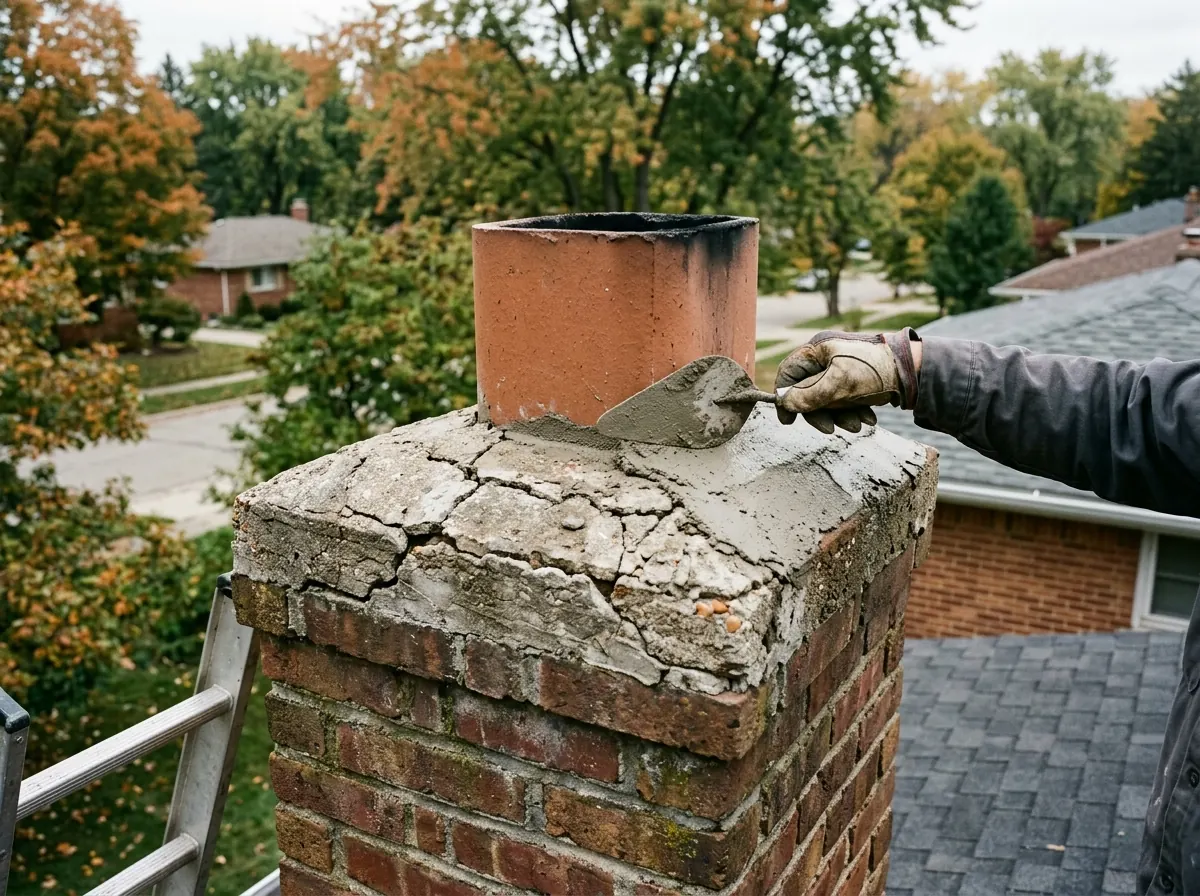
The crown is the slab on top of the brick that sheds water away from the flue. CSIA says most crowns are made of ordinary mortar, which doesn't stand up to years of weather. It recommends a Portland cement-based crown that overhangs every side by at least 2 inches, so water drips clear of the brick. InterNACHI gives a mortar cap about 15 years and a concrete one 100 or more. Hairline cracks can be sealed. A crown that's broken through or crumbling gets resurfaced or rebuilt, and that's mason's work, usually done before the new flashing goes on.
Cut-In (Reglet) Counterflashing
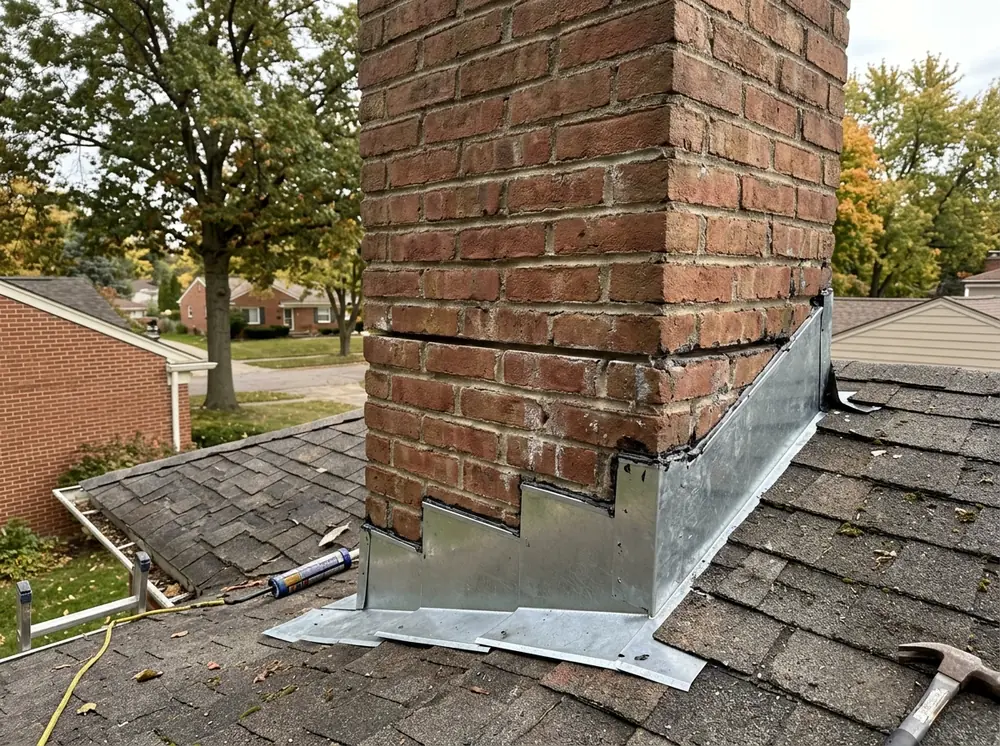
How counterflashing attaches to the brick decides how long it lasts. The durable way is a reglet: a saw cut into a mortar joint, with the top edge of the flashing bent in and sealed. The shortcut is surface-mounted flashing, held to the face of the brick with a bead of caulk along the top. When that caulk cracks, water runs behind the metal and straight into the roof. On a chimney with old tar patches, the roofer grinds out the joint and starts fresh. A stepped reglet that follows the mortar lines up the side of the chimney looks cleaner than one long diagonal cut.
Why Southfield homeowners call Southfield Elite Roofing
- Free roof inspection
- Written scope and price before work starts
- One local roofing contractor per request
- Southfield homes and buildings only
- No fee for homeowners
Chimney Flashing Repair Cost
National estimates from HomeGuide:
Minor flashing repair (sealing, patching lifted edges)
$200 to $500.Chimney cap replacement
$200 to $850.Crown repair, small cracks
$150 to $700.Crown resurfacing or larger cracks
$600 to $1,500 and up.Full crown replacement
$1,000 to $3,000.
These are estimates, not quotes. Copper flashing costs more than aluminum but lasts far longer. HomeGuide gives aluminum 15 to 20 years and copper 50 to 100. On a slate roof or a chimney you'll keep for decades, copper makes sense. On an asphalt roof due for replacement in 15 years, aluminum is enough.
Chimney Leaks in Southfield Homes
About 69% of Southfield's housing units were built from 1950 through 1979, so a typical chimney here is close to 50 years old or more. Tar or caulk smeared over the original metal is the sign of an earlier patch. Freeze-thaw winters work water into every crack in the crown and mortar. Before you approve a quote:
Ask whether the old flashing comes off
New metal over old tar traps water.Ask about the cricket
If the chimney is over 30 inches wide and has none, it's a code item.Ask who does the masonry
A cracked crown or loose bricks need a mason before the roofer flashes.Time it with the roof
If the roof is within a few years of replacement, re-flash during the re-roof and patch for now.Leaks from other spots
If the stain isn't near the chimney, see roof leak repair.